
News
Welcome to Tauber Institute for Global Operations News.
Explore our press releases, feature articles, and announcements about Tauber students, speakers, team projects, and events.

Welcome to Tauber Institute for Global Operations News.
Explore our press releases, feature articles, and announcements about Tauber students, speakers, team projects, and events.
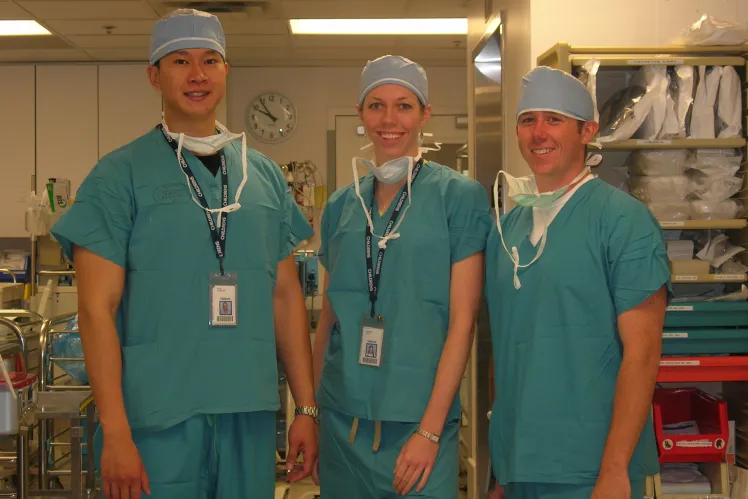
Seattle Children’s Hospital, the primary pediatric referral center for Washington, Alaska, Montana and Idaho, used lean supply chain methods taught and initially implemented by a team from the Tauber Institute for Global Operations at the University of Michigan to free up clinical staff for more bedside care and build a new and smaller facility.
As part of an ongoing continuous improvement process, Children’s sought in 2008 to reduce operational wastes, one of which was inefficient inventory control. Supplies were regularly overstocked or understocked, resulting in obsolescence or stock-outs.
In addition, supplies throughout the hospital were maintained by clinical staff members through Children’s Central Services, rather than by a trained supply chain management team. A third problem was that equipment and supplies were occupying hospital areas that could be better used for patient care, and would thereby provide more revenue for the hospital and better service to the community.
Led by Greg Beach, senior director of supply chain, Children’s had conducted a research trip to Japan, bringing along doctors, nurses and administrative staff to examine Toyota plants and discuss how they could use lean principles developed by Toyota.
Turning to logistics, Children’s then contacted the Tauber Institute, asking for training on how lean principles could be applied to the supply replenishment process. Tauber’s then-Engineering Co-Director Yavuz Bozer and Professor Izak Duenyas of the Ross School of Business conducted training at the hospital for a wide range of staff associated with supply replenishment.
The hospital also undertook an employee engagement program that provided basic lean instruction to hospital staff members, collected improvement suggestions and awarded staff accordingly.
Children’s asked the Tauber Institute for help with implementation, with Duenyas and Albert Shih, Professor of Mechanical and Biomedical Engineering, advising the project.
To implement Children’s lean initiatives, a Tauber student team consisting of Ivan Goenawan, working on a Master of Science degree in Industrial and Operations Engineering; Sean Little, a member of the Engineering Global Leadership Honors (EGL) program pursuing BSE and MSE degrees in Industrial and Operations Engineering; and Lindsay Parker, an EGL student working on BSE in Aerospace Engineering and MSE in Industrial and Operations Engineering degrees, was tasked to reinforce a culture of continuous improvement through the completion of several projects.
The most important of these team projects was designing a supply replenishment process to be implemented throughout the hospital, beginning with the Dialysis Unit. Using lean techniques and tools, including time flow charts, in-house software, employee interviews, point of use observations, kanban and supply bins, the team analyzed supply usage in the Dialysis Unit and worked with process stakeholders to develop a supply replenishment process that optimized the supply flow and eliminated unnecessary clinical staff time within the various supply chains, including sterile, perishable and controlled (charged to the individual patient).
As a result of these implementations, the item count in the Dialysis Unit was reduced by 50 percent and 125 annual hours were repurposed to patient care.
The Tauber team was also tasked to design, implement, and document a specialized procedure cart for perfusion equipment. At the completion of the project, the procedure cart design reduced setup time for extracorporeal membrane oxygenation (ECMO) machines by 30 percent, a reduction of 15 minutes; decreased opportunities for error; and provided valuable insight as a design pilot for other departments in the hospital.
In the years since the Tauber team’s visit to Children’s, the hospital continued its supply management transformation. After focusing on inpatient and clinical areas for supply management, the supply chain management team moved on to such other areas as laboratories, operative services, respiratory care, environmental services and dietary services. (See "Lean Factor: Seattle Children’s Hospital.")
With the rollout of the supply replenishment process to the entire hospital, Children’s was able to repurpose more than 8,000 annual hours to patient care, while eliminating costs and time traveled.
In a major subsequent breakthrough beyond delivery to the nursing units, the Toyota Production System was extended to the patient rooms. Beginning in April 2013, a rounding cart began twice daily in-room replenishment of the most common patient supplies in a two-bin system, using cards tracking the highest usage products. This bin system enabled Children’s to reduce nurses’ search travel time by 50 percent.
According to Beach, supplies were previously ordered and delivered on more than 15 pallets a night. Now, the hospital is on a two-bin kanban system where supplies are delivered in low unit of measure (LUM). As a result, Children’s reduced its on-site inventory from $1.5 million to less than $500,000, with the remaining on-site inventory consisting primarily of disaster supplies.
All departments’ supply management systems were integrated to reduce staffing required to manage supplies. This new integrated delivery system also reduced travel times, movement and inventories. Beach said the hospital now has one group delivering on a FedEx model.
The chaotic old delivery system, under which a department would immediately request an item as needed, has been replaced by a planned delivery model, which has eliminated 85 percent of unplanned calls for materials, and reduced nursing search and travel time by more than 50 percent.
Through these changes, the supply chain management team grew from managing $6.3 million in distributed supplies in 2007 to $19.77 million in 2014 without adding new staffing, at the same time maintaining performance metrics and reducing travel and warehouse space. One distributor, Medline, holds most supplies, with a few items ordered directly from manufacturers.
These supply management changes have resulted in a savings of more than 80,000 clinical and supply chain hours annually. The efficiencies that have been achieved bore full fruit when Children’s opened its new building in April 2014. This new facility has more than 300 beds, compared to 250 in the old one. But because equipment and supplies occupy far less space, the new building is smaller in size.
After earning their degrees, the members of the Tauber student team have launched careers in the health care industry. Little is now the lean manufacturing leader for GE Healthcare, Parker has become a health IT business process improvement specialist for KSH Solutions, Inc., and Goenawan is the director of various limited partnerships in Indonesia. Meanwhile, the Tauber Institute added Mark J. Hayward, Administrator of the Center for the Science of Healthcare Delivery and Vice Chair of the Department of Facilities and Support Services at the Mayo Clinic, to its Industry Advisory Board.