News
Welcome to Tauber Institute for Global Operations News.
Explore our press releases, feature articles, and announcements about Tauber students, speakers, team projects, and events.

Welcome to Tauber Institute for Global Operations News.
Explore our press releases, feature articles, and announcements about Tauber students, speakers, team projects, and events.
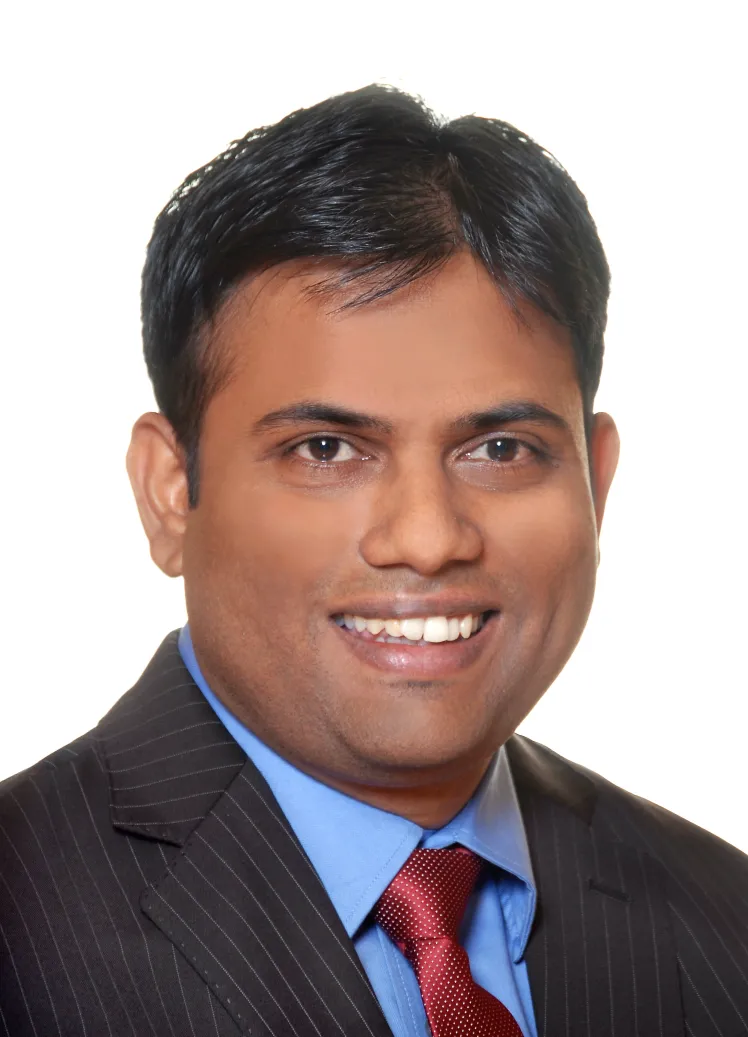
My Ramesh Chavan MSCM '15
This post was pending for the last 14 weeks. Well, it all began in January 2015 when a list of team projects was handed over to us by the Tauber Institute for Global Operations. The Tauber Institute is a joint venture between the Ross School of Business and the College of Engineering to facilitate cross-disciplinary education in global operations management. You can know more about the Tauber Institute and team projects here and here.
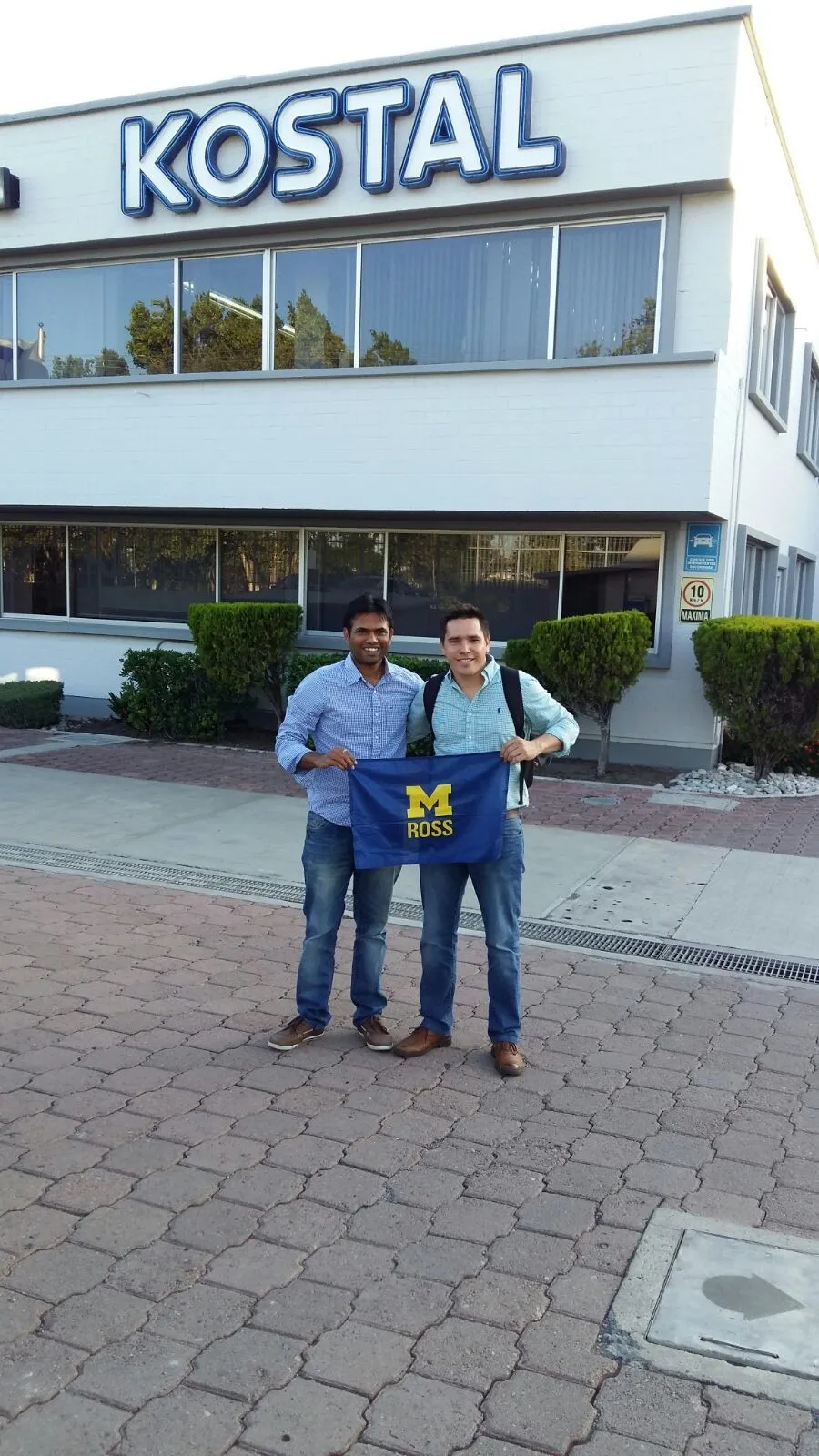
I along with my friend and project partner Jose got selected for a team project at KOSTAL, a tier 1 auto supplier, headquarter in Germany. One of the best things that Tauber team projects has to offer is the international experience. We were based out of Queretaro, a beautiful city in Mexico. Some of my other friends were globe-trotting the world, they were in Germany, Poland, India, Brazil, and at multiple locations across the United States. It sounds exciting, isn't it? Believe me it is.
Since May 2015, for the last 14 weeks, we were working on one of the most exciting projects that I have ever worked on. We were tasked to create a capacity solution that would help KOSTAL to achieve better visibility. This solution was critical for KOSTAL to create a competitive advantage.
During the first two weeks we met several associates within KOSTAL to understand the problem in hand. Once the problem definition was clear, we focused on the business need to resolve the problem. This helped us to identify the opportunities.
We then developed model or prototypes based on the concepts taught to us during our Operations and Business analytics classes. We could clearly recognize the benefits of having these classes prior to our summer internship. We kept on developing models for the next 13 weeks. We developed more than 100 of them until we thought that we had a good one. Once we had better models for the requirements we consolidated all of them into a single solution.
We were definitely not doing all this alone, during the course of this project we were consistently guided by project advisors from the University of Michigan and by a project champion and sponsor in KOSTAL. We were also helped by a key set of experts from the areas such as sales, logistics, production, and procurement. This was beneficial to create a better and useful solution.
One of the most exciting thing happened during one of the beautiful weekend mornings in Queretaro. Both Jose and I are die-hard fans of Formula 1 Racing. We came across a very exciting video that showed the importance of internal vs external setups. Jose is a lean expert and was able to relate this to an improvement that could be done in factory.
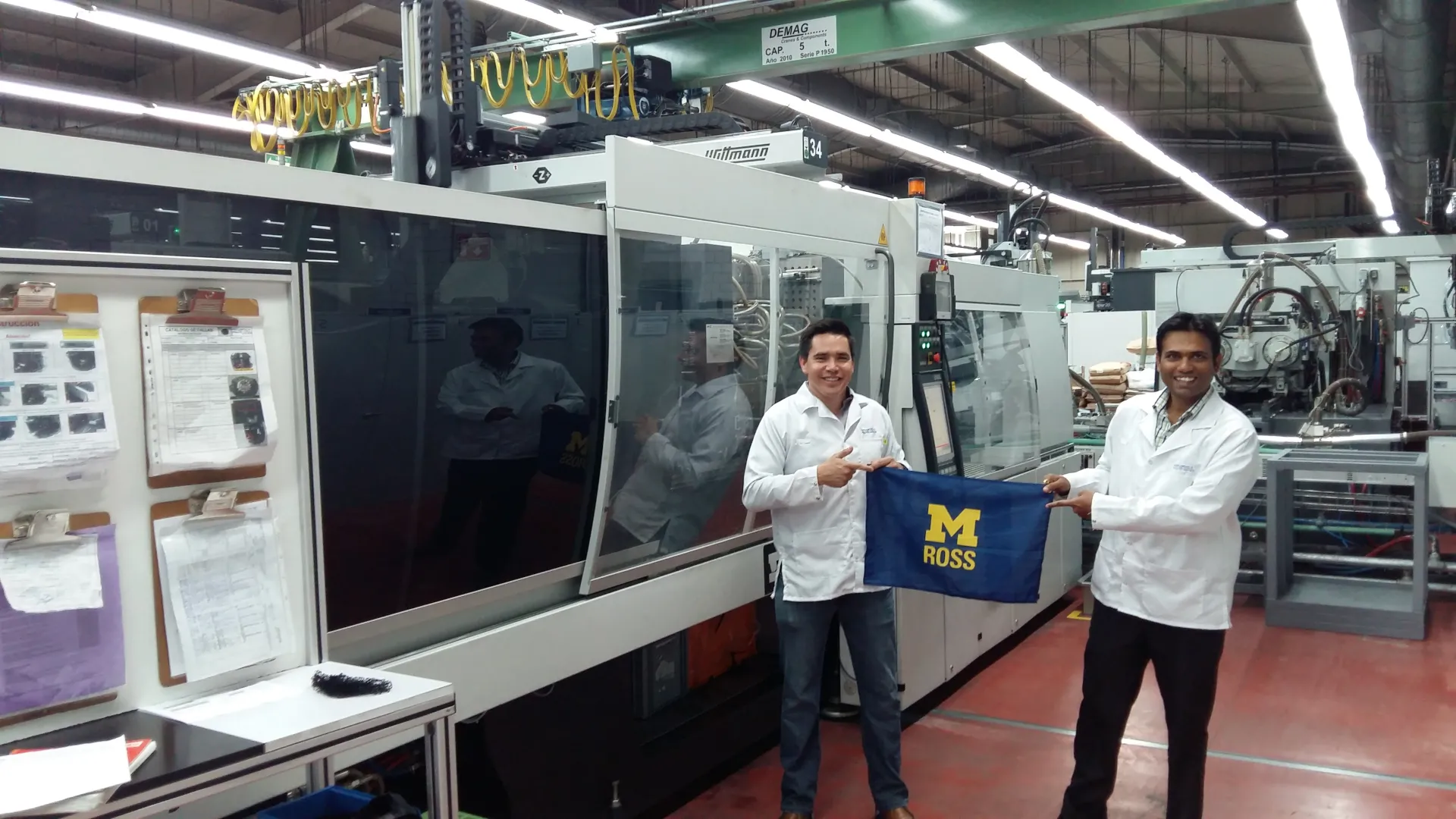
During the course of next day at work, using the solution that we had developed, we analyzed a particular process area and identified the area to be a bottleneck. We then went to the floor and observed the processing in the identified area for next two days. We observed some of the typical eight wastes in lean, and some of them were causing a significant impact. We decided to apply the SMED, a lean tool, on one of the work-centers in the process area.
We started the exercise by creating a presentation for the process improvement expert and other individuals working in the process area. We were able to convince the associates about the benefits that could be results of a successful implementation.
Once we had a buy-in, as a first step in the SMED, we did a Gemba session where-in we shot a video for eight long hours. We then conducted a session to analyze the video. Along with the team we filled in analysis in special excel sheets that were created for this session. Basically, we tried to identify whether a particular action could be segregated as internal or external; if internal then how could it be accelerated and if external, how could it be handled. As a team we were able to identify more than 40 kaizens for the work-center.
The next step we did was to create a detailed plan to implement Kaizens. And then the implementation began. After implementation of around 75% of Kaizens, the results were really astonishing. The change over time reduced considerably. The benefits of this reduction are tremendous, including reduced lead time, significant inventory reduction et.al. This action will also help to achieve production leveling and will ultimately help to have a better capacity management.
One of the key reason for this success was because of active participation of the team at KOSTAL. We observed that the team was very excited and eager to implement the suggestions. This really helped to implement the changes. This all was done in a record time of just two weeks!
To summarize in brief, it was an experience to remember. I was able to learn so much from all the associates around me, and especially from my team partner Jose. We were able to perfectly complement each other by using the technical skill set that I had and the operations background he had. I call that combination as Lean-Tech. We were able to apply most of the supply chain concepts that we had learnt during our classes, and at the end of summer were able to deliver two projects, which can create value for KOSTAL.
Well, to let you know, it was not just about work. I also enjoyed a lot in Mexico, the food is really awesome, the people are very friendly and the country is quite beautiful.
As they say in Mexico, It is time to say hasta luego, because we now have to prepare for Spotlight!
Ramesh and Jose are friends and fellow students at University of Michigan. Both have a common passion for lean operations.